

Proposed Housing Projects
Proposed Housing Projects in and Near Covina
- What is proposed
- Who has approval authority
- What the City can still do
Three affordable-housing projects are advancing in or immediately adjacent to Covina. One is outside City boundaries, one is on State-owned property, and one is being reviewed under State-created ministerial housing laws. The City can verify eligibility, apply lawful objective standards, and enforce applicable safety codes where it has authority — it cannot deny or redesign a qualifying project based only on general concerns about appearance, neighborhood character, density, traffic, or parking.
Current Proposed Projects
These are the three affordable housing proposals residents have been asking the City about.
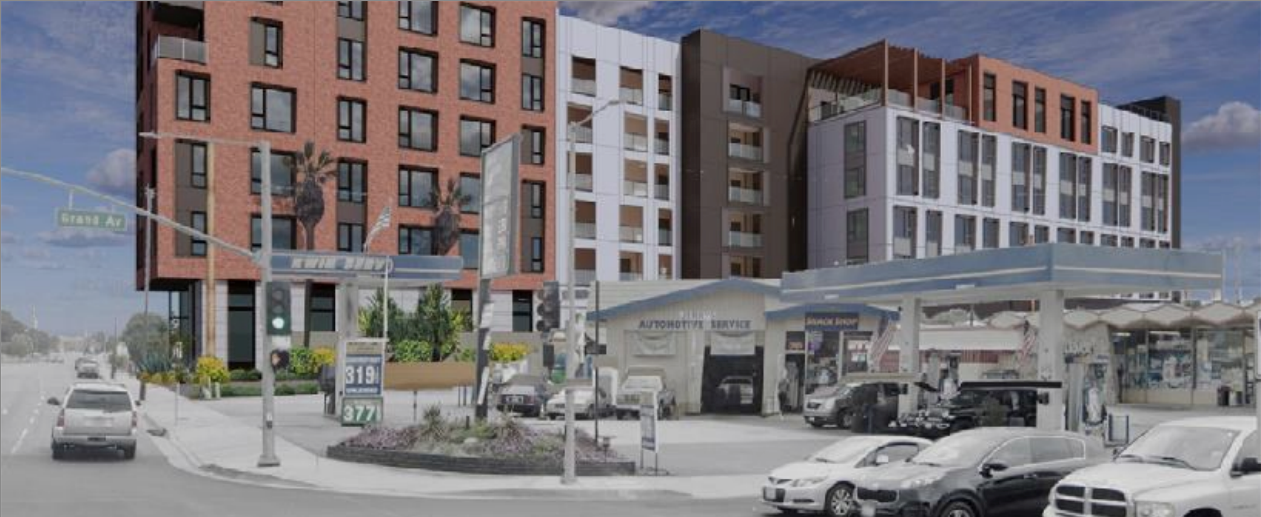
Saffron Covina
19516 E. Cypress St. · Los Angeles County jurisdiction — outside Covina city limits
affordable units
stories
land-use authority
Applicable law: Density Bonus Law (unincorporated LA County)
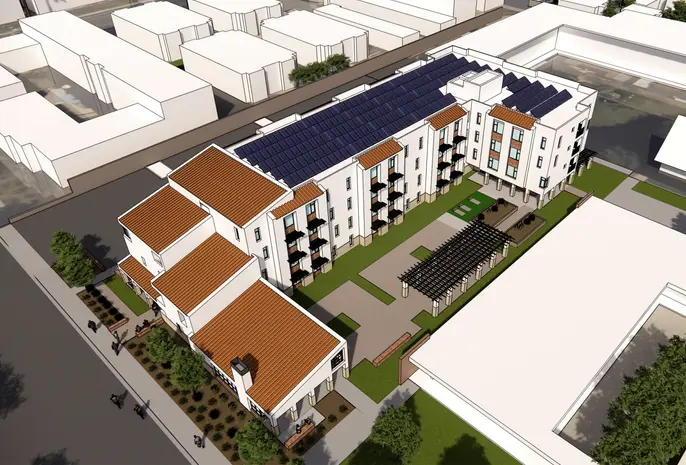
Covina United Methodist Church Affordable Housing
437 W. San Bernardino Rd. · City of Covina jurisdiction
affordable units
floors / ~46 ft.
parking spaces
Applicable law: SB 4 (Faith & Higher Eds Act) + Density Bonus Law
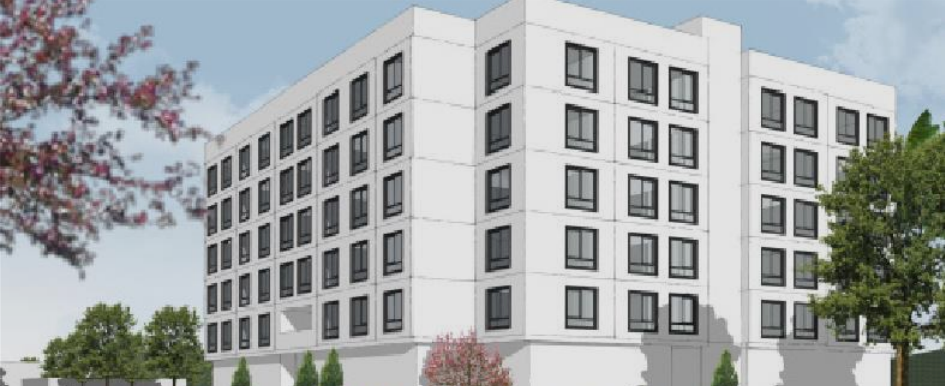
State Affordable Senior Housing
233 N. Second Ave. · State of California jurisdiction
affordable senior units
floors / ~46 ft.
parking spaces
Applicable law: State Excess Sites Program (Executive Order N-06-19)
SAFFRON COVINA
19516 E. Cypress Avenue | Unincorporated Los Angeles County
affordable senior units
stories
approx. height
parking spaces
Developer project website indicates construction is anticipated to begin December 2026
outreach
METHODIST CHURCH PROPERTY
437 W. San Bernardino Road | San Bernardino Road at Hollenbeck Avenue
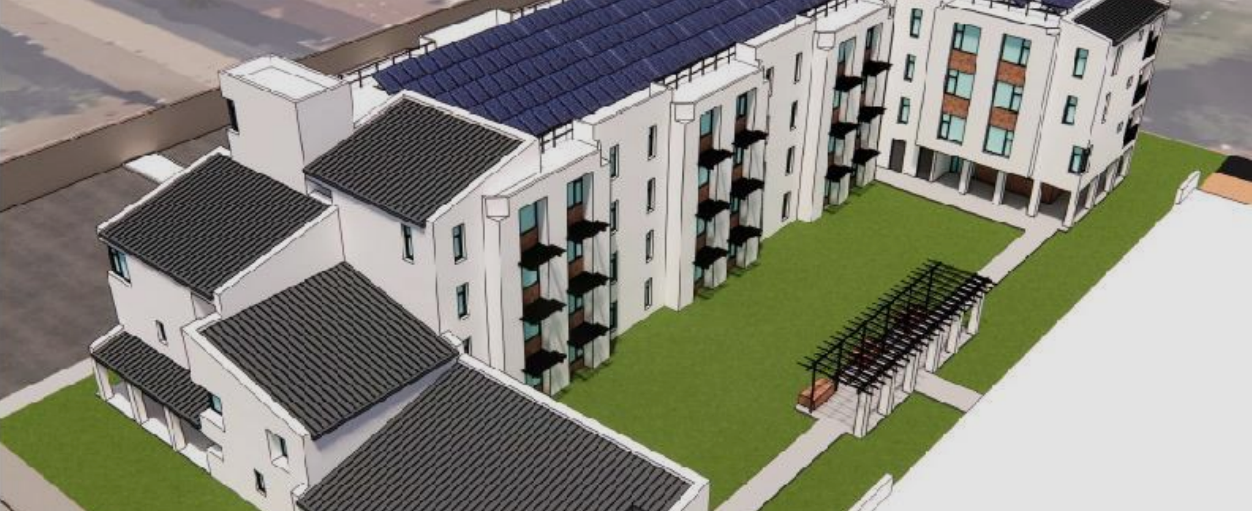
- affordable units (69 onebed, 1 two-bed)
- stories
- approx. height
- parking spaces
outreach
WHO DECIDES?
City review is ministerial if the project qualifies. Covina must confirm eligibility and apply objective, lawful standards. A qualifying SB 4 project is not subject to discretionary approval based on subjective compatibility concerns.
METHODIST PROJECT COMMENTS
City of Covina Planning: planning@covinaca.gov | (626) 384-5450. Comments should identify applicable objective standards or safety-code issues.
STATE-OWNED SURPLUS SITE
233 N. Second Avenue | Second Avenue at Italia Street
- affordable senior units
- stories
- approx. height
- parking spaces
outreach
WHO DECIDES?
State of California — no City land-use approval. Covina proposed an alternative site at 176 E. Badillo Street, approximately 800 feet away and roughly three times larger, believed more consistent with the City’s longterm planning vision. The City pursued discussions with State representatives and legislators and conducted due diligence on acquiring it; the State ultimately declined the exchange and elected to proceed at 233 N.
Second Avenue.
What authority does the City have here?
Limited to matters within its jurisdiction, such as work affecting City streets and the public right-of-way — the developer has obtained an encroachment permit from the City and paid applicable fees for that work.
STATE SITE COMMENTS
Direct land-use concerns to the State of California and project representatives. Covina will continue sharing confirmed project updates.
Why Doesn’t the City Council Vote on These Projects?
These projects involve three different legal and jurisdictional circumstances. In each case, the City’s traditional discretionary authority is limited or does not apply.
| PROJECT | RESTRICTED LOCAL CONTROL |
|---|---|
|
Methodist Church
Project |
Located in Covina, but proposed under state housing laws — including SB 4 — that can require
streamlined ministerial review. |
|
State Senior
Housing
|
Located in Covina, but on State-owned land being developed under State authority. Covina is not
the land-use approval authority. |
|
Saffron Covina |
Not located within Covina. The property is in unincorporated Los Angeles County and falls under
County jurisdiction. |
What Is the City Doing?
Even when state law limits the City’s decision-making authority, Covina remains committed to representing the interests of its residents. The City will:
- Provide residents with accurate and timely information about projects that may affect the community
- Clearly identify which governmental agency has authority over each project
- Review projects within the City’s jurisdiction for compliance with applicable objective standards and building, fire, engineering, and public-safety requirements
- Communicate community concerns to State, County, and other responsible agencies when the City does not have decision-making authority
- Advocate for meaningful community outreach by project developers and responsible agencies
- Continue advocating for state housing policies that preserve appropriate opportunities for local input while complying with California law
WHY THE CITY CANNOT SIMPLY STOP OR REDESIGN A QUALIFYING PROJECT
State law has narrowed local discretion — it has not eliminated the City’s duty to review eligibility, enforce objective standards, and protect health and safety.
Objective standards, not subjective preferences: Covina may apply standards that are measurable and verifiable — a stated setback, height limit, or building-code requirement — unless State law grants a waiver or otherwise preempts that standard. General objections that a project is too dense, doesn’t fit neighborhood character, may affect views, or should provide more parking usually are not, by themselves, lawful grounds to deny a qualifying housing development.
| STATE LAW | WHAT THE LAW DOES | PRACTICAL EFFECT FOR COVINA |
|---|---|---|
|
Housing
Accountability
Act (HAA) |
Limits denial or density reduction when a
project complies with applicable objective
general-plan, zoning and subdivision
standards. |
Denial generally requires written findings of a
specific, adverse public-health or safety impact that
cannot feasibly be mitigated; community opposition
or generalized traffic concerns do not replace that
evidence |
|
SB 330 /
Housing Crisis
Act |
A complete preliminary application generally
locks in the ordinances, policies, and
standards in effect when submitted, and
limits the number of hearings.
|
The City generally cannot change the rules after filing
to reduce units, height, or development capacity for
that application.
|
|
SB 4 — Faith
and Higher
Education
Lands |
Requires ministerial approval of qualifying
100% affordable housing on eligible land
owned by a religious institution or nonprofit
college.
|
A qualifying project does not require a discretionary
conditional-use permit and is not denied based on
subjective neighborhood compatibility.
|
|
Density Bonus
Law & AB 2097 |
Density Bonus Law provides added units,
concessions, and waivers; AB 2097
generally prohibits minimum parking
requirements within ½ mile of a major transit
stop.
|
The City may be unable to require fewer units, a
smaller envelope, or more parking where State
entitlements or waivers apply.
|
|
AB 130 & SB
131 — CEQA
Streamlining |
AB 130 created a CEQA exemption for
qualifying urban infill housing; SB 131 limits
review for certain projects that miss an
exemption on only one disqualifying
condition. |
If a project qualifies for an exemption or is ministerial,
the City cannot require a traditional EIR merely to
delay or reconsider the project.
|
WHAT COVINA CAN — AND GENERALLY CANNOT — DO
What Covina Can Still Do
- Verify eligibility - confirm the applicant meets every requirement of the State pathway it invokes
- Apply objective standards - enforce lawful, written, measurable standards not waived or preempted.
- Protect safety - apply building, fire, accessibility, engineering, and right-of-way requirements
- Inspect and enforce - review plans, issue applicable permits, inspect construction for compliance
- Inform and advocate - provide accurate information, relay concerns, seek legislative reform
What Covina Generally Cannot Do
- Use subjective standards - deny or shrink a project for being “too tall” or out of character.
- Change rules midstream - adopt new restrictions after an SB 330 application to stop or shrink it.
- Restore preempted parking rules - require parking that State law prohibits or a waiver removes.
- Demand discretionary CEQA review - require an EIR when a project is ministerial or exempt.
- Decide outside its jurisdiction - act on County or State-owned property.
PROJECT-BY-PROJECT AUTHORITY AT A GLANCE
| PROJECT | LAND-USE DECISION-MAKER | COVINA’S LAWFUL ROLE |
|---|---|---|
|
Saffron Covina |
Los Angeles County |
No approval or denial authority. Inform residents, refer
comments, coordinate on cross-boundary concerns. |
|
Methodist
Church property |
City of Covina — ministerial
review if SB 4 eligibility is
established |
Verify eligibility; apply objective standards and applicable
building, fire, engineering, and right-of-way requirements. |
|
State-owned surplus site |
State of California |
No discretionary City land-use approval. Process only those
local permits or right-of-way matters for which the City has
lawful authority.
|
The likely result is not that the project disappears. The City may lose the case, pay substantial costs, and still be ordered to approve or process the same project.
That statutory fine is only one part of the risk. The City may also face its own defense costs, the prevailing party’s attorney fees, settlement obligations, staff and consultant costs, higher penalties for continued or bad-faith noncompliance, and an appeal bond. In 2024, La Cañada Flintridge was ordered to post a $14 million appeal bond or dismiss its Builder’s Remedy appeal; it dismissed the appeal. Taxpayers can bear substantial costs while the project is still processed or approved.
Builder’s Remedy — an important distinction: A single unlawful project denial does not automatically activate Builder’s Remedy. It applies when a city does not have a substantially compliant Housing Element, and can prevent the city from denying certain qualifying housing projects for inconsistency with local zoning or
land-use designations.
Why compliance still matters to Covina: HCD found Covina’s Sixth-Cycle Housing Element in substantial compliance on February 29, 2024. Maintaining that status is essential — serious or continuing housing-law violations can lead to HCD enforcement, referral to the Attorney General, and potential threats to certification, increasing the risk of Builder’s Remedy applications.
Frequently Asked Questions
Can the City deny a project because many residents oppose it?
Not if the project qualifies for a State-mandated pathway and complies with applicable objective standards. Public concern is important, but opposition alone is not a lawful finding for denial.
Can Covina require fewer units, less height, or more parking?
Only when an applicable objective standard remains enforceable. Density Bonus Law, SB 4, AB 2097 and other statutes may override or require waivers from local density, dimensional, or parking standards.
Can traffic or safety concerns ever matter?
Yes, when supported by objective evidence and an applicable standard. Under the HAA, denial generally requires a specific, adverse public-health or safety impact that cannot feasibly be mitigated — a much higher bar than generalized concern.
Can the City require a full Environmental Impact Report?
Only when CEQA applies and no exemption or ministerial pathway controls. SB 4 and AB 130 can remove traditional CEQA review for qualifying projects; SB 131 can narrow the scope of review in specified cases.
Does this mean the City is doing nothing?
Where should residents direct comments?
Legal references: Government Code §§ 65589.5, 65913.16, 65915–65918, 65863.2, 65941.1; Public Resources Code § 21080.66. This public-information draft is not legal advice and should be reviewed by the City Attorney before publication.